There have been a lot of "firsts" at the Fairgrounds, but one of the most significant firsts is the first year of the reconfigured track and the 35 degree
banked turns. After the fire destroyed the original grandstands in September of 1965, the track went into a holding pattern. Management realized the track needed
to be updated, but wanted to wait until a decision
was made by the Fair Board to extend the lease before constructing a permanent grandstand. The “temporary” stands served the track for four seasons.
During 1969 the Fair Board approved construction of a new state-of-the-art grandstand. It would be covered like the original stands, but unique in that there would be no posts supporting the roof. A revolutionary design was implemented where a series of cables would support the roof from above. With the construction of the stands, the decision was made to build a new track as well. The track would have the steepest banks in the nation at 35 degrees. And the distance would be slightly longer than the half-mile at five-eighths of a mile.
Demolition of the half-mile started immediately after the 1969 Southern 300. Construction of the new track took longer than expected, and the start of the local season was pushed back to almost August. The track opened on July 25, 1970, with the running of the Nashville 420 Cup race. That race will get a story of its own.
During 1969 the Fair Board approved construction of a new state-of-the-art grandstand. It would be covered like the original stands, but unique in that there would be no posts supporting the roof. A revolutionary design was implemented where a series of cables would support the roof from above. With the construction of the stands, the decision was made to build a new track as well. The track would have the steepest banks in the nation at 35 degrees. And the distance would be slightly longer than the half-mile at five-eighths of a mile.
Demolition of the half-mile started immediately after the 1969 Southern 300. Construction of the new track took longer than expected, and the start of the local season was pushed back to almost August. The track opened on July 25, 1970, with the running of the Nashville 420 Cup race. That race will get a story of its own.
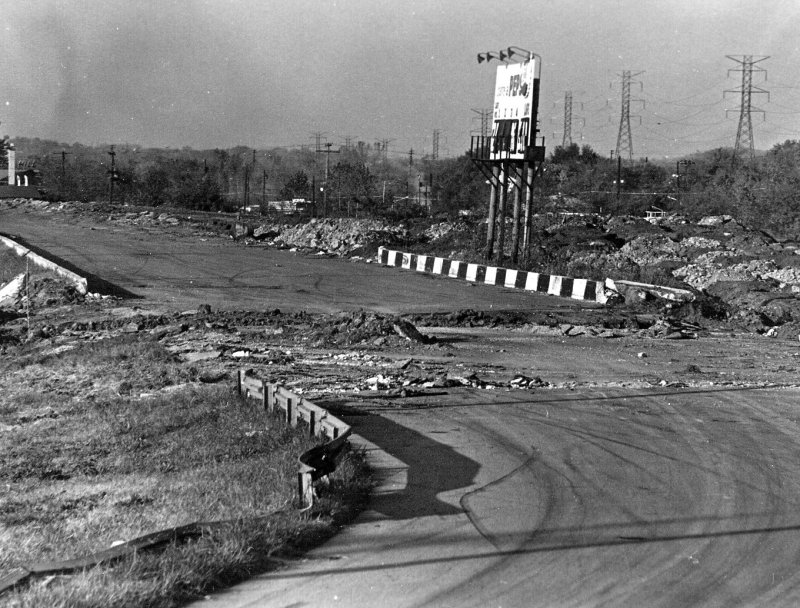
A sight I hope none of us ever see again in our lifetime
A racetrack being demolished at the TN State Fairgrounds
A racetrack being demolished at the TN State Fairgrounds
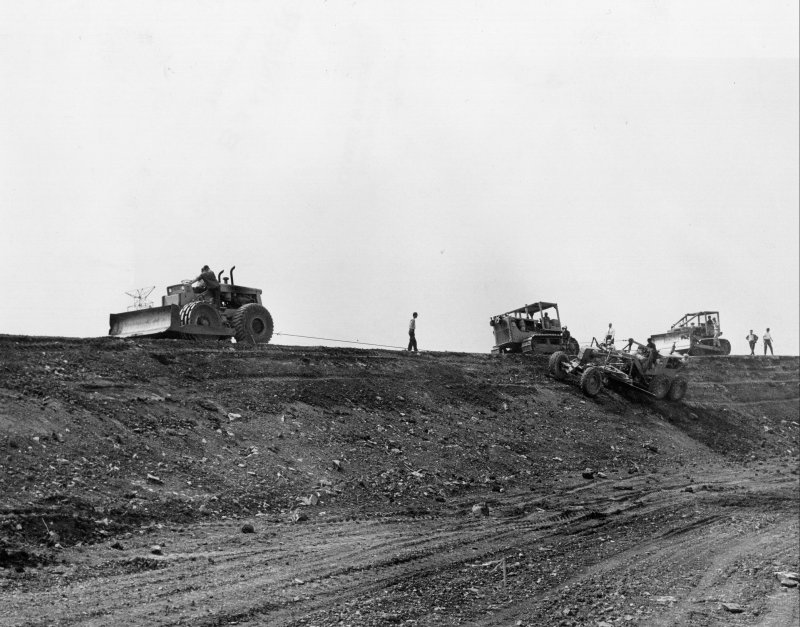
Building up the banks
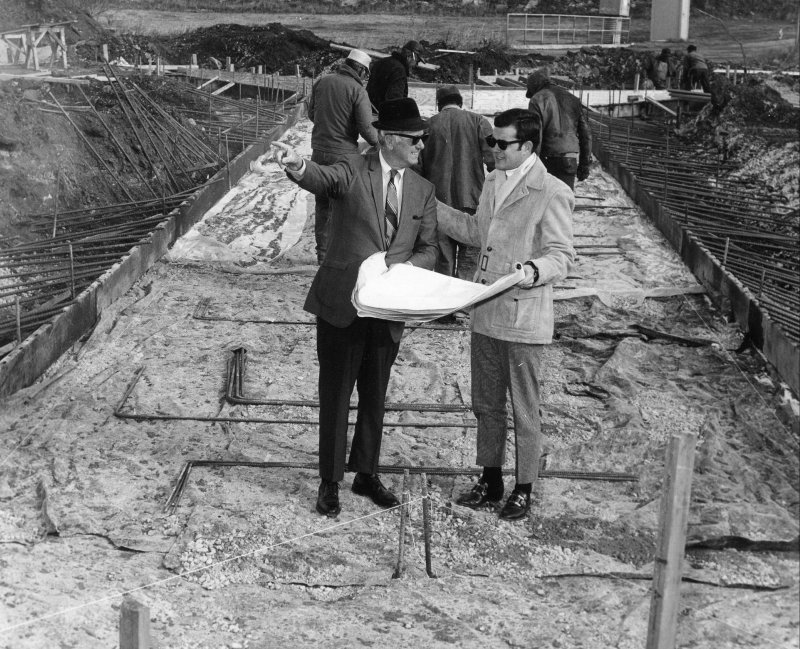
The forms for the tunnel
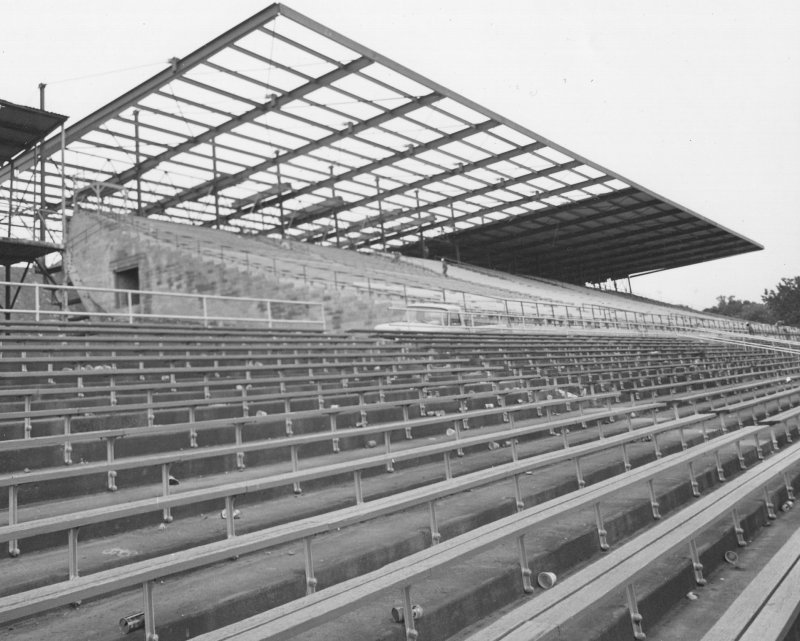
Adding the roof
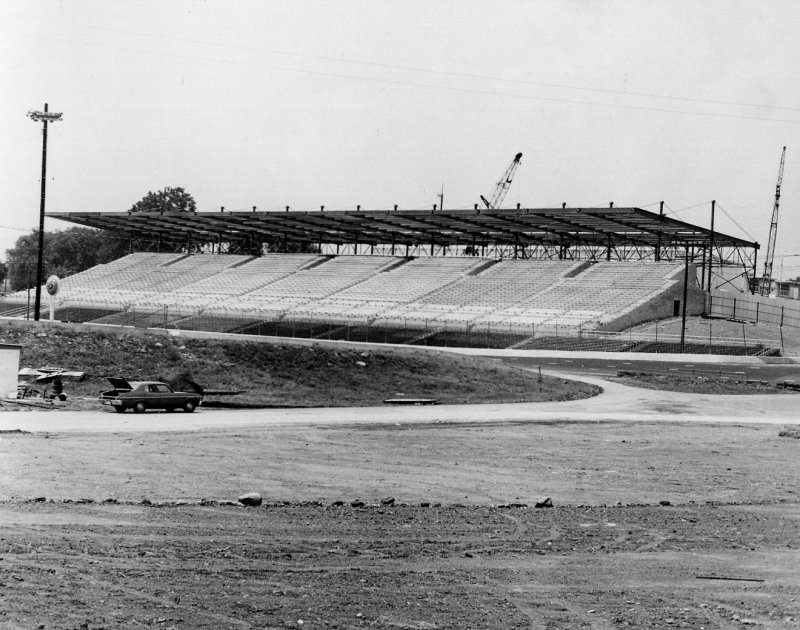
Nearing completion
The following weekend an open practice was held for the local cars. Just like when the original track opened in 1958, the daunting high banks demanded
different setups for the cars and a different driving
style for the drivers.
The pole speed for the Flameless 300 was a full 30 mph faster than the old track record. Chattanooga's Friday Hassler was on the pole, James Ham started 2nd, and a kid from Owensboro, KY, started 3rd in a car owned by 1968 track champion P.B. Crowell. He had raced at Nashville off and on since his first trip here in 1965 - before the night was over everyone in attendance would know the name Darrell Waltrip.
Charlie Binkley stormed from his 4th starting position to lead 101 of the first 110 laps with Waltrip right behind. The high banks pushed the cars beyond the limits they were accustomed to. Ham was the first car out, breaking a spindle after 6 laps. Hassler fell out two laps later with a broken rocker arm. By lap 70, 13 of the 33 starters were already on their trailers.
The pole speed for the Flameless 300 was a full 30 mph faster than the old track record. Chattanooga's Friday Hassler was on the pole, James Ham started 2nd, and a kid from Owensboro, KY, started 3rd in a car owned by 1968 track champion P.B. Crowell. He had raced at Nashville off and on since his first trip here in 1965 - before the night was over everyone in attendance would know the name Darrell Waltrip.
Charlie Binkley stormed from his 4th starting position to lead 101 of the first 110 laps with Waltrip right behind. The high banks pushed the cars beyond the limits they were accustomed to. Ham was the first car out, breaking a spindle after 6 laps. Hassler fell out two laps later with a broken rocker arm. By lap 70, 13 of the 33 starters were already on their trailers.
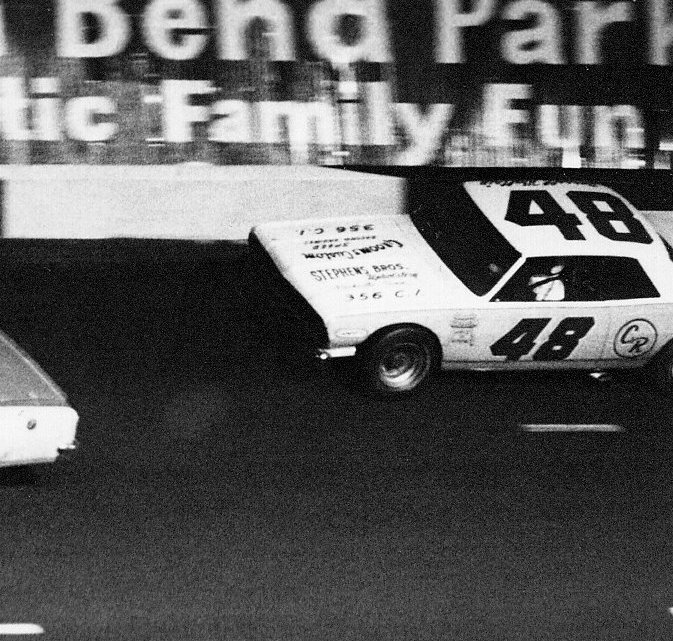
Darrell shows the fast way around was right against the wall
Binkley broke a distributor after 100 laps and Waltrip cruised home to win by FIVE laps over L.D. Ottinger. Third place Ben Pierce was 25 laps
behind Waltrip. That’s no typo. Waltrip boasted (can you imagine that?) in victory lane he would be back the next week and win again.
Twenty-three cars lined up for the first 30 lap feature on the new track. Darrell looked to uphold his promise by lowering the track record a full two-tenths of a second. James Ham qualified second only two-hundredths slower than Waltrip.
Waltrip, Ham, and former Grand National driver Bunkie Blackburn drove away from the field. Waltrip led from the start with Blackburn passing Ham around the halfway mark. As they ran nose to tail, the laps clicked off without a caution flag. The orange and two red cars lapped every other car on the track.
Twenty-three cars lined up for the first 30 lap feature on the new track. Darrell looked to uphold his promise by lowering the track record a full two-tenths of a second. James Ham qualified second only two-hundredths slower than Waltrip.
Waltrip, Ham, and former Grand National driver Bunkie Blackburn drove away from the field. Waltrip led from the start with Blackburn passing Ham around the halfway mark. As they ran nose to tail, the laps clicked off without a caution flag. The orange and two red cars lapped every other car on the track.
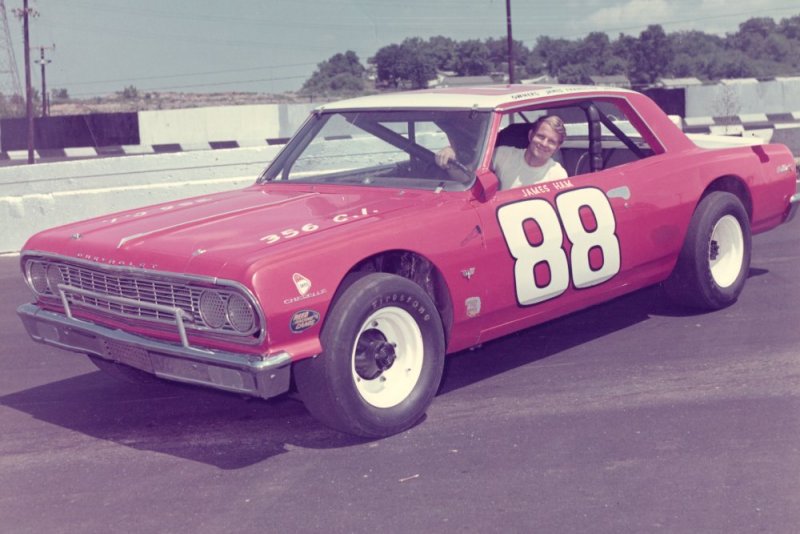
James Ham qualified on the pole twice and won one feature in 1970
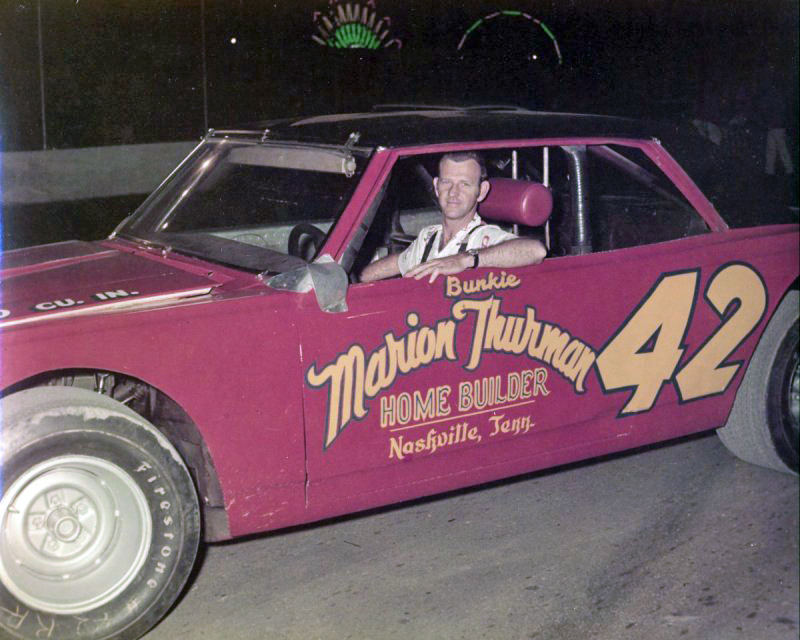
Bunkie Blackburn drove for J.W. Rippy in 1970
The white flag waved. As the cars came off turn two, James Ham, running third, picks up the story.
“As we came off turn two, I thought I was going to win the race. I saw how hard the other two had been running and I saw lapped traffic ahead. I thought they’d get tangled up with the lapped car and I’d drive by for the win.”
The only glitch in his plan was they didn’t catch the lapped traffic until they came off turn four, later than Ham expected. But the rest of his plan developed exactly as he thought. Waltrip was high behind the lapped car, Blackburn at his quarter panel. Blackburn’s #42 slid up and tapped Waltrip’s #48, and as he started sliding he hit the lapped car. All three cars slid across the line, with Waltrip crossing before Blackburn, who was scored in second, with Ham settling for third. It was one of the most amazing finishes in the history of the track.
“As we came off turn two, I thought I was going to win the race. I saw how hard the other two had been running and I saw lapped traffic ahead. I thought they’d get tangled up with the lapped car and I’d drive by for the win.”
The only glitch in his plan was they didn’t catch the lapped traffic until they came off turn four, later than Ham expected. But the rest of his plan developed exactly as he thought. Waltrip was high behind the lapped car, Blackburn at his quarter panel. Blackburn’s #42 slid up and tapped Waltrip’s #48, and as he started sliding he hit the lapped car. All three cars slid across the line, with Waltrip crossing before Blackburn, who was scored in second, with Ham settling for third. It was one of the most amazing finishes in the history of the track.
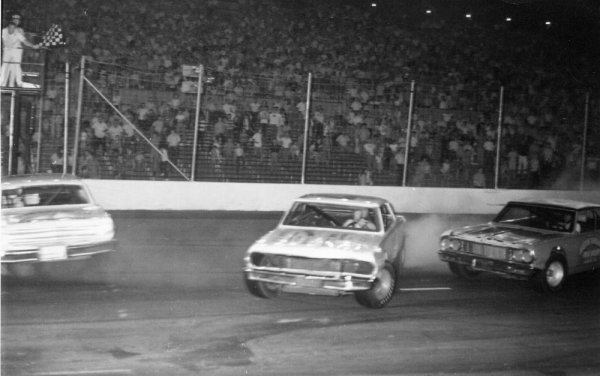
The lapped car, Waltrip, and Blackburn all slide across the line as the checkers wave
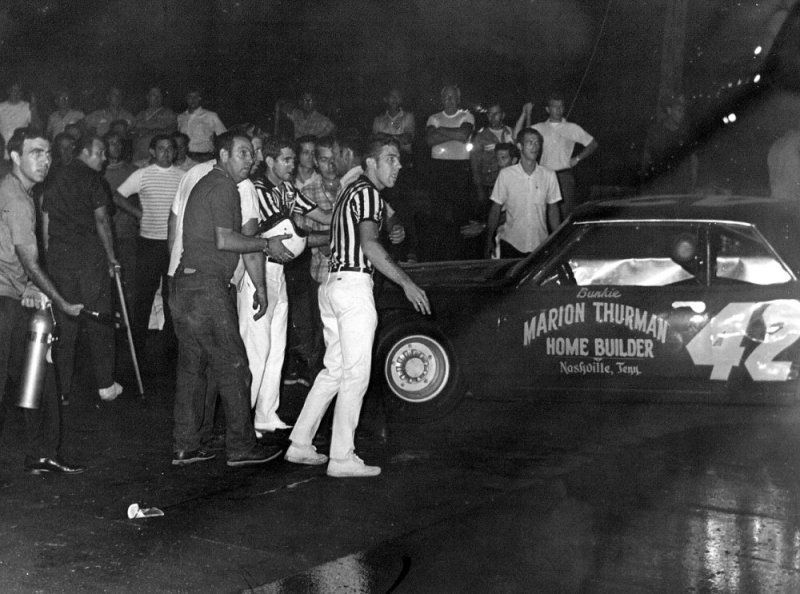
Blackburn's car after the wreck. From the looks on everyone's face, something is going on back up the track.
The following week was a scheduled 121 lap race called the Union 76 (121 laps rounded up to 76 miles). The race was delayed a week by rain after 3 laps.
Bill Morton came back the next week after hitting the wall in practice which forced his crew to rebuild the right front corner to win over defending track champ David Sisco.
Ironically, Waltrip and Blackburn both were eliminated with engine failures.
Waltrip won the next three races before Flookie Buford found the handle on his Harpeth Ford Fairlane and won 30-lap features the next two weeks.
Waltrip won the next three races before Flookie Buford found the handle on his Harpeth Ford Fairlane and won 30-lap features the next two weeks.
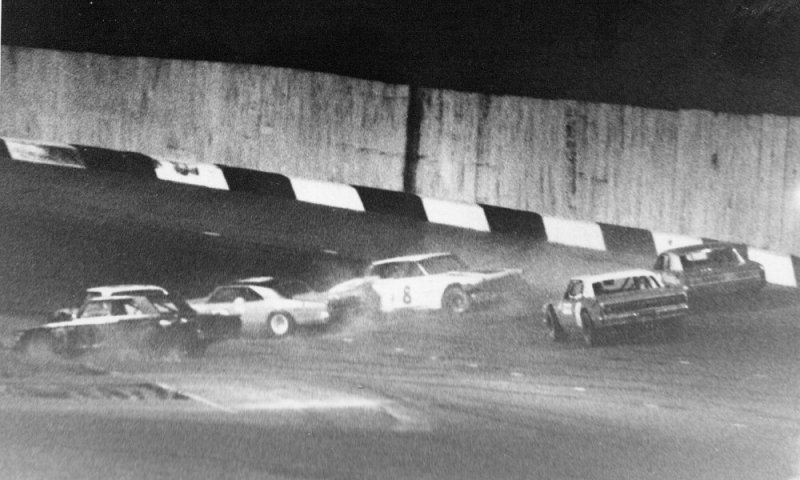
Because of the configuration, as this photo shows there was no such thing as a small wreck on the high banks
The Southern 300 normally closed out the season, but because of the late start to the season, two additional races were added in middle October
after the 300.
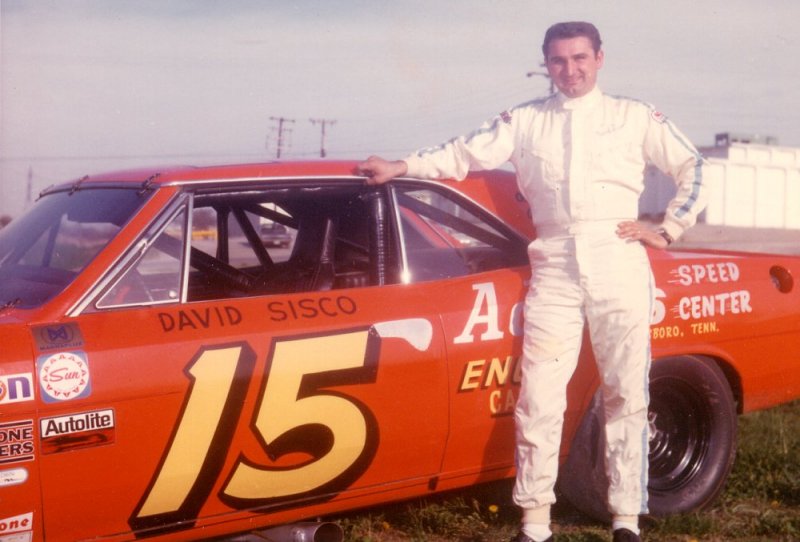
1969 track champion David Sisco prepares to defend his title
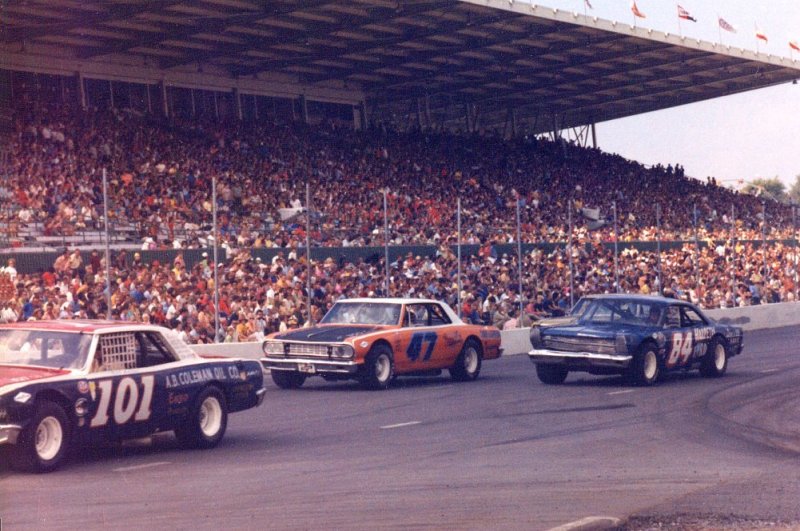
Bill Morton, P.B. Crowell, and Flookie Buford during the Southern 300
Red Farmer started from the pole for the Southern 300 and led five laps before losing the lead to James Ham. The first two-thirds of the race saw the
lead swap between Ham, Freddy Fryar, Waltrip, and Richard Brickhouse (the winner of the first Talladega 500 one year earlier). Ham led a race-high 136 laps but had trouble
just after the 100 lap mark. L.D. Ottinger led the final 70 laps to win by two laps over Harry Gant with Gary Cook third, Waltrip fourth, and Gene Glover fifth. Twenty-four
years later Glover’s son Tony would be the crew chief on the Kodak Chevrolet that Sterling Marlin drove to victory in consecutive Daytona 500s.
Alton Jones drove the #85 Harpeth Ford to a win in a 100-lap race and James Ham closed out the season with his first career win over Buford. Waltrip’s car had rear end trouble, but his 11th place finish gave him enough points to win the 1970 championship. The race continued to provide plenty of excitement. Early in the race as they were already lapping cars, L.D. Ottinger and Flookie Buford got together coming off turn four. Long-time track photographer Fred Marchman caught the action.
Alton Jones drove the #85 Harpeth Ford to a win in a 100-lap race and James Ham closed out the season with his first career win over Buford. Waltrip’s car had rear end trouble, but his 11th place finish gave him enough points to win the 1970 championship. The race continued to provide plenty of excitement. Early in the race as they were already lapping cars, L.D. Ottinger and Flookie Buford got together coming off turn four. Long-time track photographer Fred Marchman caught the action.
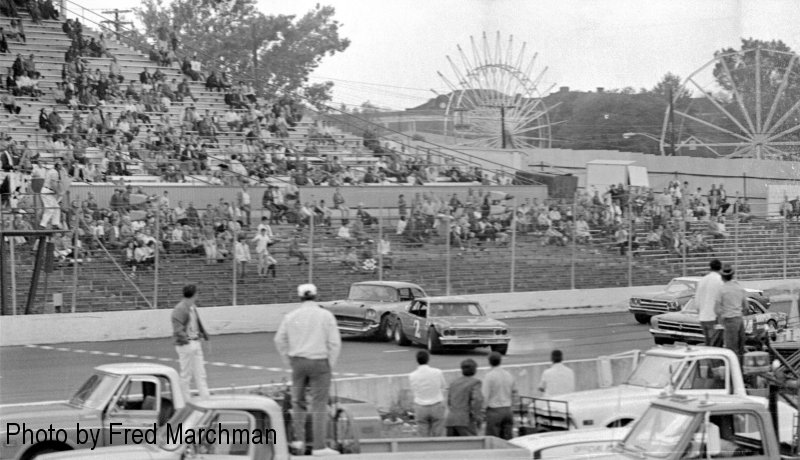
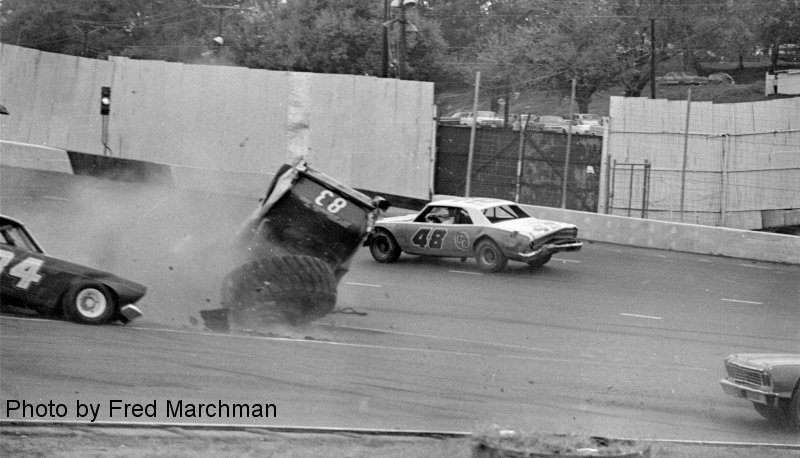
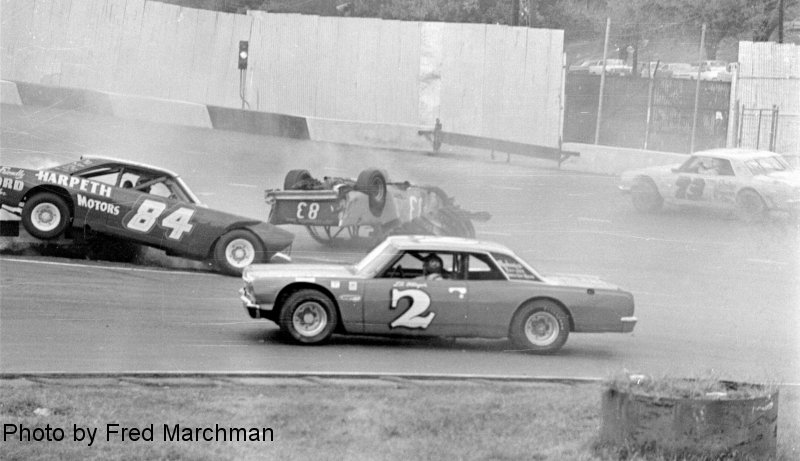
I happened to be in the stands that day. Here is some grainy 8mm film footage I shot of the same wreck:
As the checkered flag waved over the 1970 season, seasoned drivers were left still trying to figure out the new high banks. Bill Morton was the only
driver to have won on the half-mile track in the Late Model division to enter victory lane on the new track. Waltrip, Buford, Jones, Ottinger, and Ham all scored their first career
victories. Waltrip, Buford, and Jones would account for five of the first seven championships of the seventies. Everyone spent the winter getting ready for a full season on the
high banks.
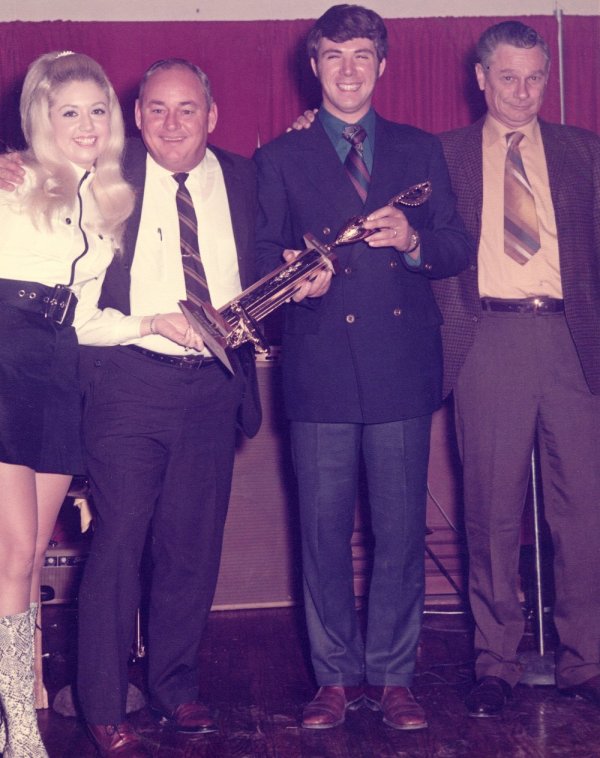
Sue Cothron, P.B. Crowell, Darrell Waltrip, and Charles Reed celebrate the 1970 championship